
Discover
MONTEGIORGIO, A THOUSAND-YEAR STORY BETWEEN WALLS AND VIEWS
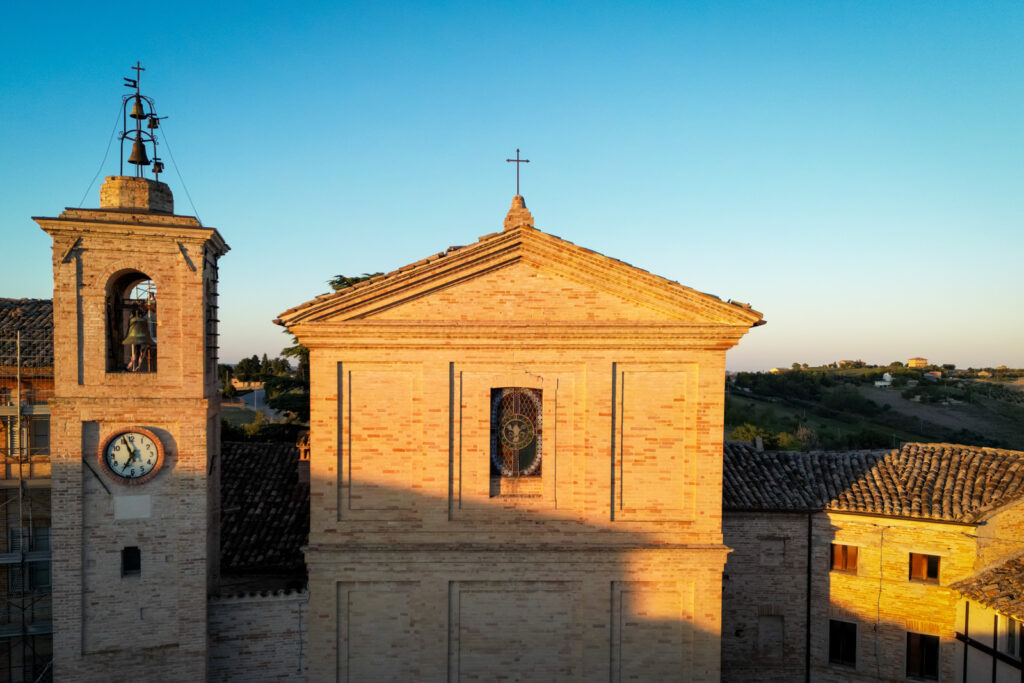
Set on a hill in the heart of the Middle Tenna Valley, Montegiorgio overlooks a landscape that stretches from the rolling Marche hills to the Sibillini Mountains. Its origins reach back to ancient times, from Picene settlements to the Roman era, as evidenced by archaeological finds discovered in the area. From the 9th century onward, Benedictine monks and later the Farfa Abbey guided the development of the village, which grew around the Church of Santa Maria Grande (now San Francesco) and its convent.
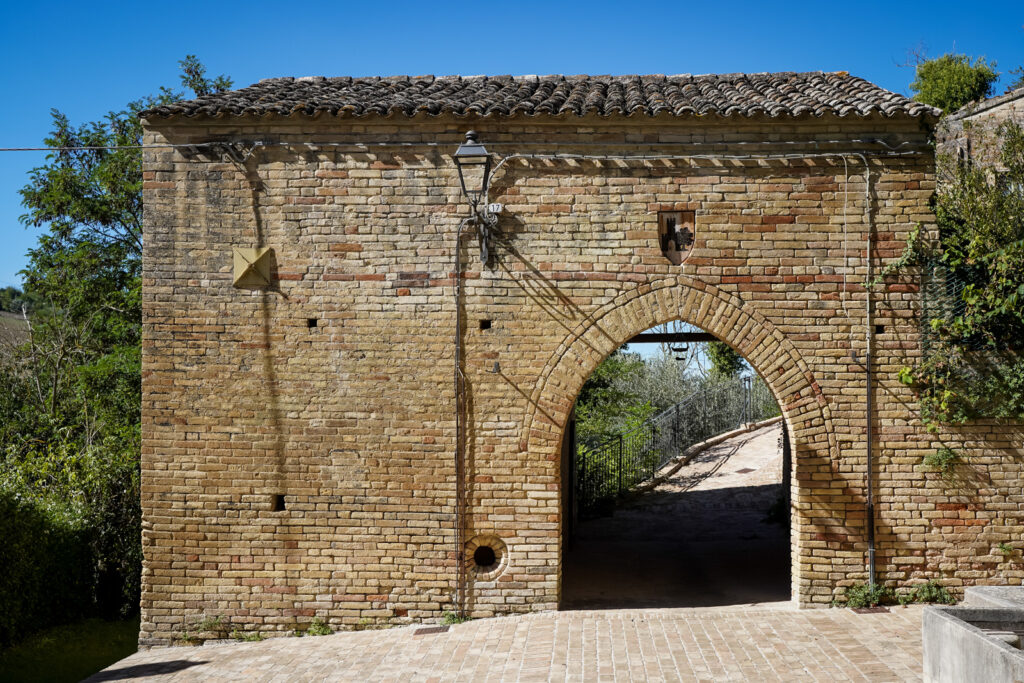
Over the centuries, Montegiorgio was a Farfa fief, a Ghibelline free commune, and a key player in alliances and conflicts with nearby Fermo. Between the 13th and 14th centuries, triangular defensive walls were built—still recognizable today—together with the town’s four historic gates.
The Middle Ages also saw the presence of a lively Jewish community that contributed to the town’s economic growth through textile and artisanal activities, particularly leather and wool processing. In the following centuries, the village was enriched with noble residences, churches, and works of art, such as the Domenico Alaleona Theatre and the loggia in Piazza Matteotti, which still today reflect the cultural and social prestige of the community.
TRADITIONS, CULTURE AND FLAVORS
.Montegiorgio custodisce un ricco patrimonio di tradizioni popolari e gastronomiche che affondano le radici nella vita contadina e nella cultura marchigiana. Il calendario è animato da eventi come la Festa di San Giorgio Martire in aprile, la Fiera di San Nicola in settembre, la Festa della Madonna delle Grazie e la Festa della Trebbiatura, oltre a rievocazioni storiche e sagre che trasformano le vie del borgo in un palcoscenico di colori, musica e sapori.
La cucina locale celebra la genuinità delle materie prime: dai vincisgrassi al ciauscolo, dai salumi artigianali ai formaggi pecorini, fino ai vini delle colline fermane come Falerio, Passerina e Rosso Piceno. La vicinanza con il mare arricchisce la proposta gastronomica con piatti di pesce freschissimo, mentre l’entroterra offre legumi, ortaggi e dolci tradizionali preparati secondo antiche ricette.
I mercati e i laboratori artigianali sono luoghi in cui incontrare la cultura del fare: qui si tramandano mestieri e saperi che parlano di manualità, creatività e legame profondo con il territorio.